Understanding Azorean Politeness: A Cultural Exploration


Evelina Silveira

shows a hot spring in the Azores

A month ago, I had one of my lifetime dreams fulfilled – I visited my parents’ homeland, Flores, Azores, Portugal, along with two other islands, Terceira and São Miguel.  It had been almost 50 years since my family’s initial visit.

The Azores are a Portuguese autonomous region comprised of nine islands: São Miguel, Terceira, Santa Maria, Faial, Corvo, Flores, São Jorge, Graciosa, and Pico. If you’ve ever wondered what paradise might look like, it probably resembles the Azores.

Growing up, I learned both English and an Azorean dialect, with which I had a basic level of proficiency.  However, with the death of my parents, I had no one to practice spoken Portuguese; therefore, I needed to prepare quickly to be able to ask questions and learn about my family history in Portuguese.

Two months in advance, I gave myself a crash course on Portuguese and listened to continental and Azorean news each day to improve my listening skills and enhance my vocabulary.  ( It worked amazingly well!)

I was determined to familiarize myself with the etiquette so that I would not come across as “maleducada” or rude. Even though my parents passed away, there is still an expectation to respect their memory by demonstrating that they raised me with good manners.  In high context cultures, no matter your age, you are always a symbol and reflection of your family name – it carries you wherever you go.

I had many questions about my parents’ homeland. I wanted to ensure I would be sufficiently fluent to have conversations with locals and connect with some long-lost relatives I had discovered who were still living in Lajedo, Flores. In preparation for the trip, two months beforehand, I spent about two hours daily listening to Telejornal Açores and political podcasts (I love politics, regardless of the language). During that period, I noticed a significant improvement in my listening skills and understanding of various accents, including continental, different Azorean, and Brazilian ones. My vocabulary expanded rapidly. I also added Portuguese documentaries to learn about the country’s history and its nine archipelagos.

 Core Traits of Azorean Politeness

As a language coach, a former student of linguistics and a child of Portuguese parents, I know firsthand the importance of understanding and following cultural norms of politeness.

For example, a “maleducado” child would refer to older people using the “tú” pronoun, which would be a terrible embarrassment for parents because they would be seen as not teaching their child proper manners. We were taught never to call adults by their first name, but instead to use the formal “Senhor” (sir) or “Senhora” (Madam). I remember my late mother saying, for instance, “Why don’t her parents correct her? Her aunt is not a ‘tú’ but ‘Tia’ (aunt). This example will often resonate with other multilingual readers.

 Greetings

While my sister and I were raised to have polite Portuguese manners, we were not ready for what transpired on our first visit there, when I was 10 and she was 18.

What did two sisters from Canada do in Fajã Grande, Flores  (which probably had a population of 300 people then) that led to a scolding from my grandmother when we got home after going for a walk in the village? 

A terrible gaffe we will never forget.

We did not say Bom Dia ( Good Morning) when we passed strangers on the street.  Little did the villagers know we had been indoctrinated from a young age to not talk to strangers.  But, in the Azores, especially in small towns, this is a basic courtesy.

After we calmed our grandmother down, my sister and I vowed to acknowledge every person we saw, whether we were standing out on the veranda, seeing someone cultivate their land or hanging out their clothes to dry.  We refused ever to be referred to as “the arrogant American girls who think they are too good to say hello”. Lesson learned.

 Fast forward, I prepared my husband (who is not Portuguese) for the trip so he wouldn’t encounter a similar problem.  I equipped him with several phrases.

Bom dia,senhor; Desculpe, não falo português. Obrigado  . Good Morning, Sir, I don’t speak Portuguese.Thank you.

Consequently, the doors were opened for us immediately, and my husband managed to strike up some conversations with locals who had broken English.  Villagers welcomed us to participate in their religious celebrations and invited us to enjoy a communal meal at the church.

 Azorean children are taught to be thankful for everything. It may be derived from their own parents’ sense of gratitude for anything that was given to them either through their efforts or with the help of others. Families who had land, crops and livestock would have been considered lucky if they could feed everyone.  There were no extras.  Reliable electricity and water supply, for example, did not come to my parents’ village until after the late 1970s.  Those who had relatives in the diaspora who could send them some money were considered fortunate.

Showing thanks can be done in several ways. While obrigado  is the standard, other deviations can be  Que Deus te abençoe  or  May God Bless You, an expression of not only gratitude but also with a religious twist. I heard “muito obrigado” or thank you very much, at a far greater rate than what we hear in Canada, often for what we might consider mundane.  On several occasions, I heard Muitissimo obrigado, which would be like an extreme thank you—expressing gratitude ties into the Azorean trait of humility.

Respecting Your Neighbours/Being Quiet

Unlike other Portuguese-speaking cultures, like the Brazilians, Azoreans tend to be more reserved and quieter. Their parties never reach the level of animation and festivity that their South American counterparts enjoy. During the two weeks I spent in the Azores, we took five flights. Many passengers had small children and babies. There were never any people speaking loudly or disturbing others with disruptive devices – that would be unheard of. What a contrast to the flights I had in North America.

While the Azoreans enjoy drinking wine and beer, you’ll find it difficult to spot a loud, obnoxious individual on the street or in a public place. Public displays of intoxication are not funny and are instead vergonhoso or shameful/embarrassing.

Silence is especially golden when it comes to listening to Fado music, Portugal’s national musical treasure. It’s a serious business.  Attending a Fado event means being prepared to respect the artist and the form by not speaking or moving around during the performance. Fado is sacred to the Portuguese. The fadista must get into their role, which often requires the belting out of theatrical, soulful and sorrowful lyrics.  When the tavern owner declares “Silêncio, que se vai cantar o Fado or  “Silence, we are going to sing the Fado,” the audience stops what they are doing and listens. When the outstanding fadista, Jessica Soares, completed her final set at the tavern in Ponta Delgada, she humbly announced, “Thank you for your silences,” which meant, thank you for not speaking during my performance.

Hierarchy

Out of respect, middle-aged people married or otherwise will be conferred the title of “Senhor” or “Senhora”. Growing up, I considered them to be the titles of “old” people. So, you can imagine what it was like for me to be constantly referred to as “Senhora” throughout my whole trip, even though this was the culturally appropriate thing to do. When I realized that “Senhora” had become my badge of honour, I embraced it, and realized I had rightfully earned it. The challenge was that I had to make sure I was respectful and reciprocal with the titles that I used. Each time I opened my mouth to talk to someone unfamiliar, I would have to use “Senhor” or “Senhora” to start the sentence.  Since the informal “you” is impolite to use on people of stature or maturity, I had to regularly reset my thought process, replacing “you” with “senhor/senhora”. 

 Unlike what I am hearing from my Brazilian friend, who has noted that the Portuguese language there is going through some revisions to address its inherent patriarchy. I wouldn’t be holding my breath in the case of the Azores, especially in the most remote islands that have had so little outside influence until recently.  When handing the restaurant bill to my husband, the waiter said,  “Senhores, posso oferecer algo mais a vocês?” This translates into: “Sirs, can I offer you anything else?”  This is a sharp contrast in some restaurant circles where servers are told to leave out the “sirs” or “madams” from their greetings in case they misgender someone. 

 Polite Insults

Years ago, when I was learning Portuguese to improve my listening skills, I watched telenovelas (soap operas) to help me acquire some basic conversation skills.  Just as all soap operas carry drama and insults, Portuguese ones had a special feature – a polite ending.  So, you could essentially yell at someone, but when you leave and slam the door, you pull yourself together to say, “Have a good day”. Is this a standard practice?  I don’t know for sure, but it seems to happen an awful lot on television programs.  

To challenge myself, I listened to the political debates before the Portuguese elections and again, despite the mudslinging, there was always some measure of decorum.  For example, you would hear accusations like Com todo respeito, o senhor é um ladrão which translates into, “With all due respect, sir, you are a thief!”.

 Nobody’s Perfect

There were so many examples of Azorean politeness and hospitality. One thing that truly shocked us about these seemingly gentle and humble people: how they behave in the driver’s seat. There were moments when I felt like Dennis Weaver’s character in the movie, Duel, about road rage. Imagine having a driver tailgate at a high speed on a very narrow road on a cliff or a decline. Some of these roads are so narrow that you can’t see if a car is coming when you turn, which is why mirrors are positioned on the streets. Many of these old roads were not built for cars but for cows and wagons.

When I commented to my hosts in Terceira that I had not heard anyone swearing, her husband said that I should attend the sporting events and perhaps I would change my mind.

Politeness in the Azores is more than a set of rules. It reflects deep-rooted values as humility, respect, gratitude, and a sense of community. These customs reveal a culture. The subtle reverence of a Fado or the everyday greetings exchanged on village streets, Azoreans esteem connection, dignity, and faith.

Of course, no place is without its twists and surprises. The juxtaposition of tranquil vistas alongside maniacal drivers is one such example. The contrast only adds to the complexity of Azorean life.

I have been shaped by both Canadian and Portuguese worlds. I’ve come to appreciate that cultural etiquette isn’t just about saying the right words. It’s about understanding the affection behind them. And in the Azores, that heart beats with warmth, tradition, and a quiet strength that’s impossible to forget.


 Be sure to check out our website, including our on-demand webinars.

Reduce Workplace Conflicts with Cultural Communication Strategies


Check out professional development opportunities that will enhance your communication skills with co-workers and clients. The full details are here.

A practical, interactive webinar facilitated by a TEFL Certified teacher, experienced diversity trainer and intercultural communication specialist, Evelina Silveira. View the complete outline here.

Do you or an employee struggle to sound professional? Maybe they are too harsh or aggressive. Learn more here.

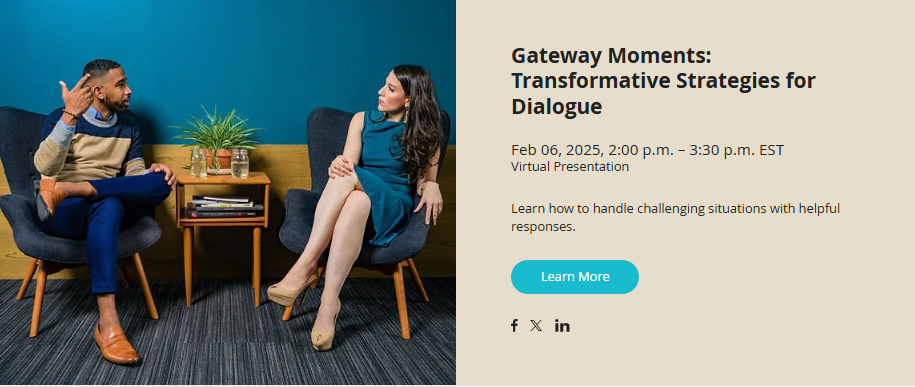
Reduce conflicts and bias while opening the doors to authentic dialogues. Learn more

To learn more about these webinars, click on the links. Please note registration closes two business days before the scheduled date. Inquire about having this webinar delivered in person or at a time that fits your organization’s schedule. Email evelina@diversityatworkcommunications.com

Overcoming Language Barriers Over the Phone – WEBINAR


Offered on September 11 & 21

Photo by Breakingpic on Pexels.com

NOTE:  The content of this webinar has been originally delivered to over 400 participants  sector-wide across Canada, within a  3-hour workshop time frame.   Approximate length is 1 hours and 30 minutes.

In this interactive,  practically-based webinar you will learn how to: · Tell if the caller has a genuine language barrier or merely a heavier accent. · Understand and decipher common distorted pronunciation and grammatical patterns with helpful tips and tricks. · Speak more clearly. · Read numbers and spell using an ESL alphabet. · Tell what tense the caller is speaking. · Guide the caller to obtaining vital information. · Calm distressed callers with three simple words. · Deal with common stressors including impolite and uncooperative callers. ·  Simplify industry terms using clear language .Past participants have included:  9-1-1 call takers,   receptionists, intake workers, crisis centre workers, program coordinators, salespeople and police officers.
This webinar includes an electronic job aid.

Learn more and register at https://www.diversityatworkcommunications.com/events/webinar-overcoming-language-barriers-on-the-phone

Meetings: A Tool Kit – New Immigrant Workplace Success Series


Evelina Silveira, President, Diversity at Work, London, Canada

meetingpromo

I am pleased to announce the release of my first tool in a series of resources to assist employers develop and retain new immigrant employees.  The  step=by-step exercises and processes will enhance your own coaching skills while empowering employees with vital information in a culturally relevant way.  I am sharing some of my coaching secrets and style which has resulted in many new immigrants enhancing their skills and employers retaining talent.

You can preview the toolkit below.  It is 31 pages in length and offers a 20-minute consultation with each purchase.  Buy it today and, begin having more productive meetings by developing your own and your employee’s  skills.  Feedback has been excellent!

Includes several handouts such as business idioms; checklist for inclusive meetings; coaching pre-assessments, low-risk no-stress ways to participate in meetings and more.

https://diversityandinclusionatwork.com/wp-content/uploads/2018/01/meetingspage1.pdf

https://diversityandinclusionatwork.com/wp-content/uploads/2018/01/secondpage.pdf

Meetings: A Toolkit Ebook

A 31-page toolkit which includes a 20 minute telephone consultation for each book sold.

C$225.00

Diversity: Can we laugh, please?


smile-1491429_640

Evelina Silveira, President, Diversity at Work  http://www.yourdiversityatwork.com

If I believe my Twitter feed, I would say that the whole world is against people of my demographic. Diversity has become so serious, scary and divisive that we have forgotten how remarkably funny it can be if we do not think the world is out to offend us.

I want to share with you a few of my experiences because it is time we start seeing some of the humour of diversity misinterpretation and assumptions.

Several years ago, I received a call from a Caribbean man who was asking me if I would be interested in emceeing a black awards night.  I gladly accepted, impressed this was quite an open-minded group to invite me to facilitate the evening.  I wrote down the details, and just before I was about to hang up the phone, I had this strange hunch that came over me. Did I think maybe he did not want me – a white person?  I asked him directly: ” Michael, are you aware that I am not black?”  There was silence for a moment.  Then with an uncomfortable laugh, he responded “No.” I said, “I thought, so.” Does that make a difference now that you know that I am white?  After a momentary pause, he remarked: well, uh, yeah”. He was dumbfounded!  How was he going to tell me that he thought I was black and that is why he called me? Digging his heels, he told me that he thought I had a “black name” and that is why he called me.  I told him that I did not know what he was talking about:  a black name? Did I look black in my picture?  Trying to wheel himself out from the mess, he tried again and said:  “Well, I guess your name is Hispanic sounding!”  I told him: “Listen, I will make this easy for you.  You do not want me to emcee your event because I am white and by the way, I am not Hispanic –but close enough—Portuguese.  I wish you good luck trying to find someone!”

A former co-worker of mine who came out of the closet at work dealt with the homophobic men in the office in a unique way.  When he went into the men’s washroom, he would belt out the lyrics to “Dancing Queen”!

Acting as a cultural mentor for a Chinese new immigrant, I remarked about Canadian informality and pleaded with him to not call me Mrs. Silveira. I explained to him all of the instances when it is appropriate to use titles.  Running into him one day, I asked about his weekend. He said it was not so good and that he had to take his daughter to the hospital.  He noted how impressed he was with the care in a Canadian hospital.  With a mesmerized look on his face, he indicated he had put into action what I had taught him about informal salutations while he was in the hospital.  As he was leaving, he took a look at the doctor’s name tag which read:  “Sandy Brown.” In a great gesture of appreciation, exiting he said: “Thank you, Sandy.” To his dismay and surprise, she replied:  “Dr. Brown”!  I apologized to my dear friend for a significant omission – doctors and titles! Ouch!

All of these new genders are confusing me. I am not sure that I like the images that come to my mind like when I hear the word “gender fluid”. When I hear that expression, it makes me think that you have to go to the pharmacy to buy something to take care of it – maybe in the special paper products section in the store.  May I suggest “gender elasticity” or “gender flexibility” instead?

I have many stories about encounters in Asian food markets. Frequently, the employees that I come across don’t speak English, and therefore there is much room for misinterpretation.  Excited about embarking on a Vietnamese culinary adventure, I headed to the store looking for the best sauce to complement the spring rolls I was planning to make.  I saw a Chinese man who was stocking the shelves and asked him if he could recommend a good sauce for my spring rolls. I said I wanted him to show me the sauce he used. Clearly, he did not understand what I had said.  Before you knew it, we were standing in front of the Heinz ketchup.  I surmised that he likely thought this was the only kind of sauce white people use!

Whether it was one too many coffees or not enough sleep the night before, I had a twitch in my right eye during a workshop I was facilitating. It was distracting and it seemed like I could not control it. Moreover, for whatever reason, each time I looked in the direction of one of the female participants, my twitch became a wink.  Low and behold, after the training session, I went up to speak to some participants that were in her area. She immediately distanced herself and appeared uncomfortable.  The moral of the story: just because someone has a twitch does not mean he or she are flirting with you!

While running a Latin American seniors’ drop-in many years ago, the participants would cheerfully greet me with: ” Como estas, Evelina?”  (How are you, Evelina)  Reciprocally, I would reply “ Yo estoy buena, gracias.” I did this for months, thinking that I was saying:  “I am good, thank you.” A few of the older women would consistently give me strange grimaces.  One day we had two new participants from Colombia attend who decided to test me again and ask me how I was.  I gave them the same response, only this time they started laughing!   I realized that the “good” wholesome feeling I was trying to express, had, in fact, some other less innocent connotation!

After finishing my presentation about living with ADHD, I had a blind man come up to me and say:  “Wow!  I really feel sorry for you, it must be difficult bouncing off the walls all the time!”  I laughed and corrected him that I don’t bounce off walls too often but appreciated his empathy–even though I felt he was the one with the challenges!

It is time to bring the joy and laughter that diversity can bring! Feel free to share your funny incidents below.


What the Brits’ Telly Can Teach Us About Diversity Dialogues


tv

Evelina Silveira,  President, Diversity at Work

When you think about British television, what comes to mind?  Well, if you are not British most of us would probably say Coronation Street  because it has been around forever on Canadian televisions. But there is so much more to discover!  Deciding to join the cable cutting crowd, I have opted for YouTube instead, for my nightly viewing. And British TV is it!

I have been so impressed with the wide range of British television programs devoted to social experiments in the form of reality TV.  To their credit, it appears the Brits are sincerely trying to understand “the other” through their programs of cultural exchanges of various sorts.  They’re not your regular run-of-the-mill low budget reality programs but thoughtful, out-of-the-box productions that are not afraid to ask the tough questions.

Why do I find the programs to be so remarkable?  Because the participants in the social experiments get a chance to “walk in the other person’s shoes” and freely ask questions without being afraid of a label of “homophobe”, “racist”, “islamaphone” “xenophobe” etc.  You get to see the good, the bad and the ugly.  Nothing is held back and I like that.  At least, when everyone has their preconceptions on the table you have something to work with instead being terminally superficial and polite.

What I began to notice in British television was delightfully refreshing.  The Brits actually engage others in a conversation about diversity.   I don’t see that happening in Canadian television.  All  we ever see is one side of a story and you either accept it or you don’t.  There is rarely an opportunity for two groups to come together and learn about one another and gain sensitivity, empathy and insight into the other group’s world.  The Brits seem to love programs devoted to “social experiments” and I have to tell you as a lover of sociology and anthropology — these types of programs score high for me.

It must have been a television genius who came up with the subject matter.  I have watched at least one  episode with the following themes:

  • A small group of Brits who have to live like a Muslim for a designated period of time.
  • Six men from a variety of backgrounds and lifestyles who go to live in a Benedictine monastery and must follow their rules
  • Nasty British teenagers who are sent to live with an American Amish family to help them reform their ways
  • Bad behaving British teenagers who are sent to live with another family in a foreign country which is known to be “very strict”
  • Several English citizens who feel they have been negatively impacted by immigration are matched with immigrants to challenge some of their assumptions

What so good about these experiments? What do participants often learn from the experience?

  • There is greater understanding that can come from honest and often challenging conversations. You might either become stronger in your conviction or  more empathetic to the other’s experience.
  • There is value and meaning in learning about other people’s rituals even if they seem far off.
  • We can be enriched by others’ experiences and might find adopting aspects of their lives to our own.
  • Having your assumptions challenged is not a bad thing and it contributes to your own personal growth.  You can also help others grow by letting them express their biases/stereotypes and prejudices and work with them.
  • You can’t live in a liberal democracy without expecting to be offended occasionally: a price of freedom of expression.

For example, in the BBC documentary a young British-born  worker is matched to a Polish immigrant who owns his own construction business.  The young man contends foreigners are taking all of the jobs.  He gets to meet Mariuscz  a business owner and notices that his whole shop is full of only Polish workers which fuels his negative perception.   However, when he has a conversation with Mariuscz he realizes that these workers have a starting wage which is much lower than he would accept.  Mariuscz says he started at a low salary and worked his way up in a shop and finally decided to open his own business.  Mariuscz however is challenged to see that hiring only Polish workers is discriminatory and that he could benefit from English-speaking employees.  He is open to accepting this criticism and comes to see that his workers would learn English if there was someone around who would be prepared to speak it.  The result of this dialogue?  I would say a win-win for both participants.  Each was open to hearing the other’s point of view and challenge their own thinking.

British television shows me how much we Canadians have in common  However, I would have to say a few programs that I watched momentarily would never survive in Canada.  They are just too mean! Programs like Fat Families and Life on the DoleLife on the Dole  does not seem balanced at all.  Most of the cast consists of drug addicts, people who don’t want to work and ex-cons.  We don’t see many examples of the working poor.  If the purpose of Life on the Dole  is to make working people angry about the poor, than it succeeds in that regard.  If this program was filmed in Canada the slant would be different.  It would be aired to bring about empathy and awareness of the poor and set in a more compassionate light and with less of a classist tone.

All in all, British television rocks!  I need to run —-  Wife Swap UK is on!


Hurray! It’s Hockey Night in Punjabi!


By:  Evelina Silveira, President Diversity at Work

What is more Canadian than hockey? Maple syrup or poutine? No, not even that!  So what do you get when you add our favourite symbol with a sprinkle of Indo-Pakistani culture? Hockey Night in Canada in Punjabi!

You don’t have to understand Punjabi to appreciate the game. In fact, some of the enjoyment comes from listening to the broadcasters shout out a score.

The elation is magnified in Punjabi!

On the surface, Hockey Night in Punjabi may seem like just a hockey game moderated in another language, but its impact is far-reaching.

It’s a testament to:

  •  the “power of the buck”. It makes for great business. Punjabi is one of the most widely spoken of immigrant languages in Canada. This is a great way to expand the brand and sell! Market segmentation allows for new opportunities for growth.       Whoever thought of this was a genius!


  • from an integration point of view, it shows you can adapt and enjoy cultural aspects of a new country and make them your own.


  •  it tells us sport can bring people together whether you are an Indian-Punjabi speaker or a Pakistani one, cultural differences can be set aside to enjoy the game.

Not unlike the Punjabi spectators, when my parents came to Canada they had never seen a hockey game.  Football (soccer) was their sport of choice back home as ice rinks and snow were no where to be found.  However before long, they discovered the joys of watching Hockey Night in Canada every Saturday.  My mother could enthusiastically rhyme off the names of her favourite team — The Toronto Maple Leafs (this was the  70’s); complete with a Portuguese version of their name.  Before long, each trip to the corner store meant I had a new set of hockey cards with pictures of toothless Darryl Sittler and Eddy Shack!  I never really got into the game on TV, but did not want to break my mother’s heart. I accepted the hockey cards just the same appreciating them for the stick of bubble gum.

Integration into a new culture is not an easy thing to do, but every effort must be made to look at the brighter parts of what it can offer. Hockey Night in Canada in Punjabi tells us while cricket may always be the beloved sport in India and Pakistan, cultural adaptation is possible and necessary.

From a business perspective, it shows us immigrants have spending power and taking a one-size-fits all model may mean missing out on economic opportunities.

So, hurrah for Hockey Night in Canada in Punjabi!  You score on many levels!


POTLUCKS AND THE POLITICS OF FOOD IN THE WORKPLACE


Evelina Silveira, President, Diversity at Work   co-author,  The No-Nonsense Guide To Workplace Inclusion

potluck[1]

While splitting the check, B.Y.O.B, potlucks, and eating leftovers from the catered luncheon are routine in a Canadian workplace; by far this experience  is not an international phenomenon. While you may think your welcoming, kind gesture to “break bread” with a New Canadian co-worker is a good idea, don’t be surprised if they have a different interpretation. Food and eating can be a highly political affair. Political? Indeed – political! Let’s take a look at one of our most popular epicurean rituals which has stood the test of time.

Potlucks

Why do we have potlucks in Canadian society? Potlucks offer an inexpensive, easy way to feed large groups of people, while providing an assortment of food the guests may have never sampled. It’s about sharing: food, workload, and preparation.

What are the beliefs that sustain potlucks in Canadian society?

  •  Cooking is a chore and not many people like it and especially when it involves trying to please a number of people whose preferences are unknown.
  • If you want to have a gathering everyone should be “pitching in” financially and effort-wise. Food and entertaining is expensive and it shouldn’t be up to one person to do all of the work.
  • It’s more fun if we all help out and we can share the joy and responsibility.
  • Hospitality doesn’t need to be formal. You can still be hospitable and casual at the same time. Everyone can be a host. It doesn’t take a lot of skill, effort or rules.

How might these beliefs clash with people who are coming from countries which are more hierarchical, formal and collectivist?

In a big way! Although the price of food has increased dramatically, it is still widely accessible and  affordable by comparison to other parts of the world. We don’t have a lot of rituals around eating except for “eating on the run”, “fast food” and “Tim Horton’s”. With a growing acceptance of vegetarian and veganism what we eat these days is less based on social stratification and more inclined to be on preference.

North Americans tend to view food in a “profane” way as the famous sociologist Emile Durkheim would probably conclude. Food is ordinary and nothing special, has no associated rituals or beliefs to preserve its “sacredness”.

This would be in sharp contrast to the many New Canadians who are more likely to view food as “sacred”. They may have grown up learning how to cook with recipes passed down from the generations, or associate foods with symbolism and rich meaning and a wider array of festivals and celebrations. Some foods may be used for medicines or spiritual healing or to bring good luck or fertility. The “sacredness” of food means the act of eating is a“sanctified ritual”. For example, Jews and Muslims will refrain from eating pork products and the meat they eat must conform to “kosher” or “halal” standards. It means that the animals are slaughtered in a religiously prescribed way to enhance the sacredness of the food and thus the sanctity of eating.
Hospitality is a lost art in North America. If you have ever shared a meal for instance with an Afghan, a Portuguese, or an Arab family – the hospitality cannot be compared. You will be treated like royalty and no effort or expense will be spared. The goal is not to make the experience easy for the host, but just the opposite. By contrast, the host wants to show you how much you mean to them by going through lots of trouble and expense. You will not feel obliged to do the dishes nor would they want you to. They want you to relax and have them entertain you. You may actually feel that they have enlisted their whole family to make you feel comfortable. The experience is formal and every action is intentional. Good hosting skills lead to many benefits including: new jobs, connections, elevated status, marriage proposals, a strengthened ability to negotiate, but most of all preserving or enhancing one’s reputation.

Are potlucks a good idea in a North American workplace? It all depends. If you want to celebrate or show appreciation for a job well done you may come across as a cheap manager or employer – an insult to your New Canadian workers. Showing appreciation and respect for employees and especially those from more formalized cultures requires: a demonstration of effort; some expense and conveying their importance in the workplace which is not a bad approach to take with all of your employees. Is it?

Actions You Can Take To Increase Intercultural Understanding in the Workplace


By:  Evelina Silveira,  President, Diversity at Work

1. Start up a Diversity Book Club or Discussion Group    You can take turns assigning a reading which is pertinent to your work and designate a regular meeting time for your discussions. Tailor it to your industry and the specific knowledge you would like to gain.
For example:
Indian-Style of Leadership – This could help organizations who have a number of New Canadian Indian employees gain an understanding of the differences in leadership style in India. It can give leaders an awareness of what some of the challenges these employees may have based on their previous work experiences and help them become more acclimatized to a Canadian workplace.
Cultural Differences in the Way Disabilities are Communicated. The way cultural groups talk about disabilities tells us a lot about their values and how people with disabilities are treated in their communities.
Plagiarism Around the World – Understanding how different countries feel about and define plagiarism is important in preparing international students for post-secondary education.

2. Spearhead Employee Resource Groups These groups can provide valuable information to advance the goals of your organization. If you happen to have a New Canadians ERG, it can be drawn upon to provide education to the rest of the employees and make suggestions for program development and provide insight into new markets.

3. Infuse Cultural Tidbits Into Existing Vehicles of Communication Whether you have an intranet, a regular newsletter or hang up posters, don’t miss out on an opportunity to encourage cultural learning. What about your staff or departmental meetings? After all, when we learn about other cultures, we learn a lot about ourselves!

4. Examine Your Corporate Social Responsibility Initiatives Is there a way you can increase your interactions with some of the major cultural groups in your community? Volunteer at a settlement agency? Be a mentor? Consider sponsoring cultural events.

5. Increase or Begin to Offer Student Placements/ Co-ops Work with local agencies serving diverse clientele and post-secondary institutions to bring diverse workers to your organization. You will be amazed at how much you learn from the experience!

6. Take a Cultural Competency Inventory Ask employees if they have: knowledge of a second language, experience from work abroad and cross-cultural education. Having this information handy can be a real help when you are considering the appropriate people for foreign assignments or need some emergency assistance with a culturally diverse client who you are having difficulty communicating

Multilingualism: An Essential Ingredient of Culturally Competent Healthcare


Image

By: Evelina Silveira, President, Diversity at Work in London Inc, Publisher, the Inclusion Quarterly

Everyday occurrences and unprocessed feelings usually form the basis of my blogs. Today’s is no different. It is Tuesday, and I am still thinking about the elderly Italian woman I saw over the weekend in a long-term care facility and left wondering: Is there a better way to meet the needs of residents who do not speak English?

I don’t know Rosa (name changed to protect her identity) but I do know that she is Italian as I recognize some of the words she yells or her conversations to imaginary people. No one understands what she is saying and nurses and attendants just continue to speak to her in English, or they ignore her completely because they just don’t know how to communicate with her. Residents will refer to her as “the crazy one” or the “one who is always screaming”. I only know a few words in Italian, but I happened to recall the expression, Che bella ragazza. I decided to look directly at her and say these words to her, checking to see if there was a response. For a moment, she paused as she appeared to hear something familiar and I only had wished I could remember more. I had just referred to her as “a beautiful girl!”  Her face temporary lit up and my heart was warmed. If only, I could have a conversation with her, I thought.

I had to wonder, what was it like for her to be in a home where no one understands her. How frightening to become invisible and voiceless. What a disappointing way to end the remaining years of one’s life.

The need for multilingual staff and volunteers is extremely important in effective healthcare delivery. As more immigrants are entering these facilities, I believe that we could be at a crisis point if we do not do more to address this issue especially in long-term care. Even though the immigrant resident may be fluent in English, for reasons I don’t understand they will often resort back to their mother tongue especially as dementia sets in.

While it may be impossible to have staff who can speak all the languages the residents do, there should be more effort made to provide care to them in their own language.

Here are some recommendations for providing more multilingual services in long-term care.

Employee Recruitment . Research the demographics of your community and include foreign language competencies in job postings based on what you find and on your current service needs.

Libraries and Print Materials. Consider purchasing or asking for donations of multilingual books, periodicals and tapes that residents can enjoy. Add international media.

Foreign Language Training.  There are many low-cost and no-cost ways of learning another language. Conduct a Google search and you’ll find many that are free.

Create a Picture Dictionary With Basic Words and Salutations. These small gestures could go a long way with keeping the resident more stimulated in addition to increasing the competencies of the employees.

We are facing unprecedented changes in healthcare and creating more culturally competent organizations do not have to be costly. Using existing community resources and becoming more innovative in the recruitment, selection and retention of employees can go a long way with developing more inclusive services.


  • Sensitivity Empathy Training for Workplace Bullies

  • Enter your email address to follow this blog and receive notifications of new posts by email.

  • Workplace Inclusion and Customer Service Publications

  • Anti-Bullying and Harassment Training for Groups

  • Learn more about our English as a Foreign Language Coaching for Business Success

    Teacher Pointing at Map of World ca. 2002

  • Follow me on Twitter